
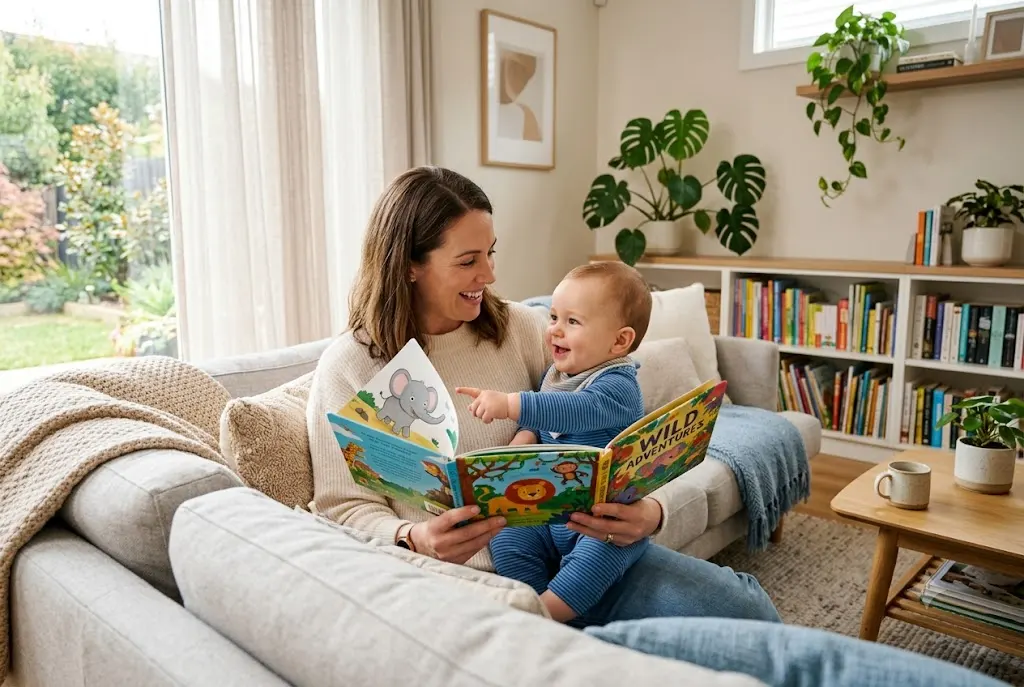
How do babies learn language? It’s a question many parents ask as they watch their child respond to voices, smile at familiar sounds, and eventually say their first words. Language development begins much earlier than most people realize—even before birth. Every conversation, song, smile, and story contributes to a child’s growing communication skills. Understanding this natural process helps parents create an environment that supports healthy language acquisition in children and encourages lifelong learning.
In this guide, we’ll explore how babies develop language step by step, why early literacy development matters, and what parents can do to support communication from infancy through the toddler years.
How Do Babies Learn Language from Birth?
Babies are born with an incredible ability to recognize patterns in speech. During the first few months of life, they listen carefully to voices, facial expressions, and everyday conversations. Although they cannot speak immediately, their brains are already building the foundation for language.
Research shows that infants learn by observing, listening, and interacting with the people around them. Rather than memorizing words, they gradually connect sounds with meaning through repeated exposure.
Before Birth
Language learning actually begins during pregnancy. By the third trimester, babies can hear voices and recognize familiar sounds. After birth, many newborns respond more strongly to their mother’s voice because they’ve heard it repeatedly before they were born.
The First Six Months
During the first six months, babies begin to:
- Recognize familiar voices.
- Respond to facial expressions.
- Differentiate speech sounds.
- Make cooing noises.
- Smile during conversations.
Although these behaviors seem simple, they represent important milestones in language acquisition.
Language Acquisition in Children Happens in Stages
Language acquisition in children follows a predictable sequence, although every child develops at their own pace.
6 to 12 Months
Babies begin babbling with sounds such as “ba-ba,” “ma-ma,” and “da-da.” While these sounds may not initially have meaning, they help babies practice controlling their mouths, lips, and tongues.
They also start responding to their names and simple words like “bye-bye” or “no.”
12 to 18 Months
Around their first birthday, many babies begin speaking their first meaningful words.
Common first words include:
- Mama
- Dada
- Ball
- Dog
- Milk
- Bye
Vocabulary grows rapidly when adults consistently talk with children throughout daily activities.
18 to 24 Months
Vocabulary expands quickly during this stage. Many toddlers begin combining two or three words into simple phrases like:
- “More milk.”
- “Daddy home.”
- “Big truck.”
- “Want cookie.”
This marks an important step toward complete sentences.
Why Talking to Babies Matters
Some parents assume babies don’t understand speech before they can talk. In reality, every conversation helps strengthen brain connections responsible for communication.
Simple activities include:
- Narrating everyday routines.
- Describing objects around the house.
- Asking simple questions.
- Making eye contact during conversations.
- Responding to baby sounds.
These interactions encourage children to become active participants in communication.
Early Literacy Development Starts Earlier Than Reading
Many people associate literacy with reading books independently. However, early literacy development begins long before children recognize letters.
Important early literacy experiences include:
- Listening to stories.
- Looking at picture books.
- Singing nursery rhymes.
- Learning new vocabulary.
- Recognizing patterns in speech.
- Developing listening skills.
These early experiences prepare children for future reading success.
Activities That Support Language Learning
Read Every Day
Reading picture books introduces children to new words, sounds, and sentence structures. Even infants benefit from hearing books read aloud.
Sing Songs Together
Music combines repetition, rhythm, and pronunciation, making language easier to remember.
Play Interactive Games
Games such as peekaboo, naming objects, and animal sounds encourage communication while making learning enjoyable.
Describe Daily Activities
Simple narration helps children connect words with real experiences.
Examples include:
- “We’re washing your hands.”
- “Let’s put on your shoes.”
- “The apple is red.”
Common Myths About Baby Language Learning
Myth 1: Babies Learn Only After They Start Talking
Language learning begins long before first words appear.
Myth 2: Educational Videos Replace Conversation
While quality educational media may help, face-to-face interaction remains far more effective for language development.
Myth 3: Correct Every Mistake Immediately
Children learn better when adults model correct language naturally instead of constantly correcting them.
Signs of Healthy Language Development
Although every child develops differently, many babies demonstrate healthy progress by:
- Responding to voices.
- Making eye contact.
- Babbling regularly.
- Using gestures.
- Saying simple words around one year.
- Combining words during toddlerhood.
If parents have concerns about delayed communication, consulting a pediatrician or speech-language professional is recommended.
How Parents Can Create a Language-Rich Environment
The home environment plays a major role in language acquisition in children.
Helpful strategies include:
- Reading daily.
- Talking during routines.
- Limiting passive screen time.
- Encouraging curiosity.
- Listening patiently.
- Answering children’s questions.
Even short conversations repeated consistently contribute to long-term language growth.
Supporting Future Language Skills
As children grow, parents can continue strengthening communication by using proven teaching children english language learning methods that encourage vocabulary, listening, and speaking. Families can also benefit from a comprehensive language guide to discover additional language study resources and literacy learning tools.
Later, learners may explore what is foreign language as they begin studying additional languages and expanding their communication skills.
For evidence-based information on child development, parents can also explore resources from the CDC’s Learn the Signs. Act Early. program.
Frequently Asked Questions
At what age do babies start learning language?
Babies begin learning language before birth by hearing familiar voices and continue developing communication skills immediately after birth.
How many words should a one-year-old know?
Many children say a few meaningful words around their first birthday, although vocabulary growth varies between individuals.
Does reading to babies really help?
Yes. Reading supports vocabulary, listening skills, comprehension, and early literacy development from infancy onward.
Can babies learn more than one language?
Yes. Children are capable of learning multiple languages simultaneously when they receive regular exposure to each language.
Conclusion
Understanding how do babies learn language helps parents recognize that communication begins long before first words appear. Through loving conversations, storytelling, songs, play, and everyday interaction, children naturally develop language skills that support future reading, learning, and social success. By encouraging language acquisition in children from the earliest months, parents build a strong foundation for lifelong literacy and communication.